Oracle Precision
Oracle Precision: Built on partnership, strengthened by the Kaleidex Group.
When Shaun Palmer and Ryan Taylor founded Oracle Precision in November 2011, they didn’t set out to build a high-volume machine shop chasing short-term wins. They set out to build something steadier. Something deliberate.
Something capable of manufacturing highly complex precision components for critical industries, particularly medical and aerospace, while developing long-term partnerships with the kind of customers who value collaboration over transactions.
Fifteen years on, Oracle’s track record speaks for itself: long-standing customers, zero losses, strong staff retention and a reputation for taking on the work others avoid. Now, as part of the Kaleidex Group, Oracle enters a new chapter, one that builds on its foundations while unlocking fresh momentum for the future.
A commercial mindset rooted in relationships
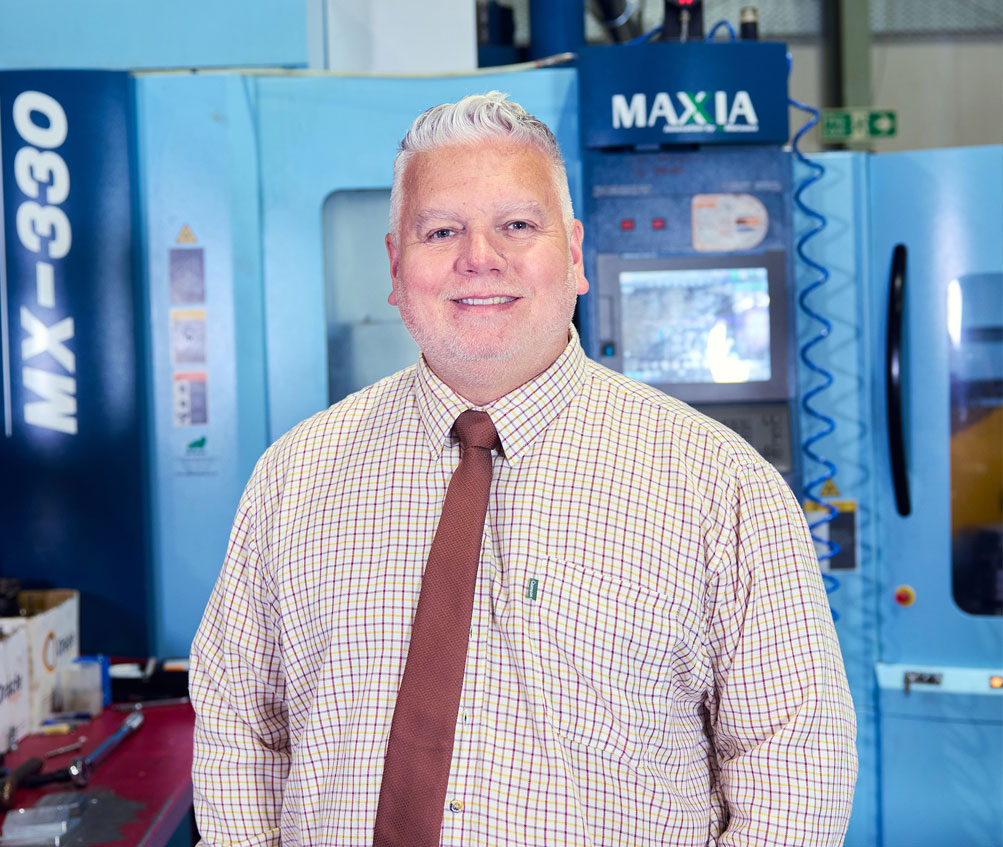
As Co-Founder and Commercial Director, Shaun’s role spans the entire lifecycle of customer engagement. “It’s full lifecycle,” he explains. “It starts with finding the right customer, what I call our ideal customer profile.” That ideal profile isn’t simply about volume or turnover. It’s about alignment.
Oracle’s customers are often businesses without in-house manufacturing capability, companies that require a true precision engineering partner to guide them through the design-for-manufacture process, regulatory demands and production realities.
“They don’t just buy the product, they buy everything that comes with it. The availability, the support, the willingness to help them through a challenge.” This partnership approach is reflected in Oracle’s customer retention. Many relationships stretch back 12 or 13 years, no small achievement in a sector where supplier turnover can be frequent.
“It’s easy to win a new account,” Shaun says. “It’s much harder to keep one. Customers won’t tolerate inconsistency for long.”
Complexity as a calling card
Oracle Precision does not compete by offering the simplest solution at the lowest cost. Instead, it often becomes the supplier of choice when complexity is high and risk tolerance is low. “We tend to do the things that other people either avoid or can’t do,” Shaun says. “And to this day, we’ve not failed on those projects.”
The components manufactured at Oracle rarely follow a linear production path. A single part may move between turning, milling and revisiting operations multiple times, a far cry from conventional engineering workflows.
That complexity demands a deep understanding of capacity planning. “The capacity is an organic, living animal,” Shaun explains. “It’s part of the commercial offering.” Balancing workflow, machine capability and customer demand requires constant communication between production and commercial functions. It is this live visibility, and the discipline to manage it, that allows Oracle to maintain both performance and margin.
Culture as competitive advantage
While technical capability is critical, Shaun believes Oracle’s true differentiator lies in its culture. “We’ve created more of a family than just a group of people turning up to work,” he says.
Staff retention reinforces that claim. Many employees have celebrated ten years or more with the business. Apprenticeships are a central part of the growth strategy, with several former apprentices progressing into highly successful careers — both inside and beyond Oracle.
“You spend a lot of time at work. It’s important that you enjoy what you do and the environment you’re in.”
This stable workforce contributes directly to the consistency customers experience. In high-spec industries such as medical devices and aerospace, trust is earned not only through certification, but through reliable human relationships.
Oracle’s accreditations, including ISO 13485 for medical devices and AS/EN aerospace approvals, reinforce its credibility. For a business of its size, maintaining these standards represents a significant commitment.
But for Shaun, they are non-negotiable. “They set us apart from a standard manufacturer,” he says. “The regulatory commitment required is substantial, but it’s what our customers expect.”
Resilience through balance
Oracle’s strategic segmentation across industries proved invaluable during the Covid-19 pandemic. “We didn’t make a loss. We didn’t lose a single member of staff. And we didn’t furlough anyone,” Shaun reflects.
He attributes that resilience partly to judgment, and partly to maintaining a sensible market balance. If one sector slows, another can absorb capacity. That approach avoids overexposure to a single revenue stream, even when certain projects become commercially dominant.
“We’ve always tried to keep our nose above the waterline,” Shaun says. “It’s easy for small businesses to chase work just to keep machines spinning. That’s a race to the bottom.”
Oracle’s discipline in managing “work in versus work out”, ensuring that orders align with machine capability rather than overwhelm a single process, has been central to its sustainable growth.
Technology and ‘Lights Out’ thinking
The precision engineering skills gap remains a national challenge. Oracle’s response has been investment, not just in people, but in automation. By implementing advanced technology capable of “lights out” manufacturing, Oracle effectively operates three eight-hour shifts per day while requiring human supervision for only one.
“It gives us stronger margins and makes us more commercially competitive,” Shaun explains. But technology is not adopted blindly. Shaun frames investment decisions around three guiding questions:
- What is the market telling us?
- What are we genuinely good at?
- Where do we make money?
“We can fill the machines with work that loses money. That’s not sustainable for anyone.” Robotics, additive manufacturing and advanced production methods remain under active evaluation, not as trends to follow, but as tools to serve customer needs more effectively.
Why Oracle fits the Kaleidex vision
Joining the Kaleidex Group represents a strategic inflection point for Oracle. Historically, Shaun and Ryan resisted external investment. Growth was organic. Expansion was earned, pound by pound. “We’ve never made a loss,” Shaun says proudly. “But organic growth limits how fast you can move.”
Becoming part of Kaleidex changes that dynamic. The group structure provides access to complementary skills, broader capability and shared expertise, without diluting Oracle’s identity. “The group gives us the resources to make the dreams come true,” Shaun says. “We now have access to capabilities we may have lacked before. That’s powerful.”
For Shaun, the synergy is particularly compelling within healthcare and life sciences, sectors where Oracle already has significant, if sometimes under-recognised, experience. “We were building technical files for hip replacements 25 years ago,” he notes. “We probably had more capability in that space than we gave ourselves credit for.”
With Kaleidex’s wider ecosystem, Oracle can now pursue longer-term market segments, particularly in medical and orthopaedics, with greater confidence and infrastructure support.
Looking ahead
For 2026 and beyond, success is not defined by explosive growth. It is defined by stability, clarity and intelligent expansion. “Success is keeping the ship steady,” Shaun says. “Being loyal to the customers we’ve had for years, while carefully building the right new relationships.”
There is a clear intention to deepen focus within medical and high-spec industries, potentially increasing healthcare’s share of Oracle’s portfolio to around 70%, while continuing to support aerospace and other accredited sectors.
Above all, Shaun remains grounded in a simple commercial truth: “People still buy from people.”
In an industry increasingly shaped by automation and technology, Oracle Precision’s strength lies in its balance, advanced capability underpinned by human partnership. That balance made it successful as an independent business.
And it is precisely why it is such a natural fit within the Kaleidex Group. The foundations are solid. The culture is proven. The capability is growing. For Oracle Precision, joining Kaleidex is not a reinvention. It is an acceleration.